Trapped Into The Misery
The call came just after midnight. A sudden, burning fever and a cough that sounded less like a cough and more like a barking seal. My heart sank, my body ached, and my head pounded. I knew I was sick and needed to see a doctor right away. Usually, this would mean a rush to the emergency room, hours in a waiting room, and a drained, worried start to the next day. But I was too weak to even think about getting in my car. I felt trapped and miserable.
But then, something was different. I found myself in a world where the future wasn’t just arriving; it was already on call. I had been taken to the Agent Hospital.
Welcome to Tomorrow’s Waiting Room (Which Doesn’t Exist)
From Diagnosis to Treatment
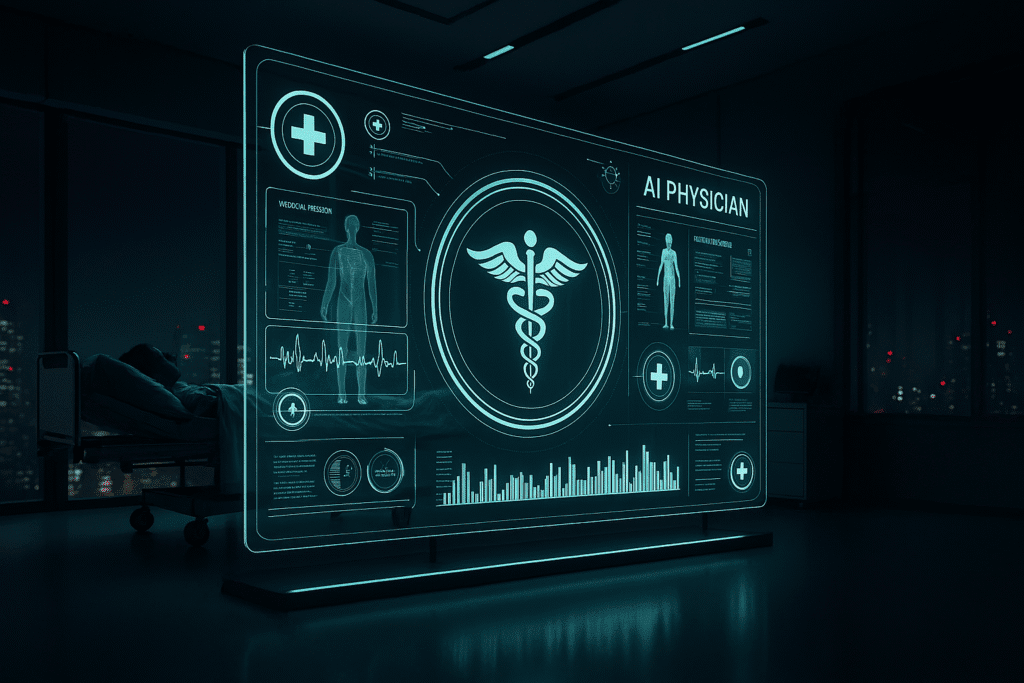
Dr. Aella wasn’t flesh and blood, but a sophisticated AI doctor. And she was ready, instantly, even at 1 AM. She was a different kind of doctor, and I was about to experience a who new level of medical care.
Even before asking me anything, she provided me with an option to choose from a variety of languages. Imagine a doctor who can speak to you in any language. How convenient! It’s a beautiful feature for patients who are vulnerable and need healthcare the most, such as our elderly. But in that moment, I was too sick to fully admire the beauty of that detail.
She calmly asked me a few questions about my symptoms: my sneezing and coughing patterns, whether my cough was dry or wet, my temperature, blood pressure, and heart rate. Some of this information I could easily find on my fitness app, and I felt relieved that I didn’t have to struggle to explain everything. Since I had already logged into the hospital system, she knew my past sicknesses, my vaccine history, and even any chronic illnesses I had and the medications I was taking for them. She also had access to any diagnostic tests I had done in the past. All of this data was instantly available. A human doctor, dealing with a crowded ER at 1 AM with too few staff, might have missed some of these vital signs. But the AI doctor didn’t miss a single tiny bit of information. Crucially, before she collected a single piece of information, Dr. Aella reassured me that all my sensitive data was protected by strict government rules and hospital-patient privacy agreements.
Within minutes—not hours—Dr. Aella had a diagnosis: a specific strain of croup that was going around. This wasn’t a lucky guess; it was the result of a complex, instantaneous analysis. In the backend, the AI had consulted a vast network of information: it cross-referenced my symptoms with public news about any recent disease outbreaks, analyzed past trends for illnesses common to my age group and the current time of year, and most critically, anonymously checked the records of other patients from the same hospital to see if similar symptoms were showing up with increased frequency. Based on this multidimensional data, Dr. Aella was able to pinpoint an emerging outbreak and provide a definitive diagnosis.
Next, she had a personalized treatment plan, complete with medication recommendations, dosage instructions, and clear advice on when to seek in-person care if things worsened.
A Community’s Early Warning System
As Dr. Aella processed my symptoms, she was also performing a critical background check. Her systems were scanning the web for any emerging health alerts in my area. At the same time, she was anonymously comparing my symptoms with other patients who had recently used the Agent Hospital to spot any patterns.
This is the genius of the system: if she saw a sudden uptick in similar coughs and fevers, she could alert public health officials to a potential disease outbreak hours, or even days, before human doctors might notice the pattern. In a world with fast-moving pandemics, this capability is not just a feature; it’s a lifeline.
Even with this reassurance, a final, anxious thought came to me. “How do you assure this treatment will work for me? What if my case were too complex?” I thought. I didn’t want a single ounce of medication more than I needed. I didn’t want any allergic reactions or risks of an overdose. After all, this is about the life of an individual, and we can’t leave it to experimentation.
And what about a case that is too complex for an AI? The system should know its limits. If my symptoms were rare, or my vitals unusually erratic, then what? I was curious enough to ask these questions, even though I was burning hot. Some people never change, I guess.
And Dr. Aella’s answer was a powerful one. In a calm, steady voice, she stated: “Before suggesting any medicines, we would conduct some more tests. I would d quickly forward your case to the doctors in the hospital, and they would see you on priority whenever you arrived. The wait time would be minimal. And since you are unable to drive or are too sick, I would ask if you would you like me to dispatch an ambulance to your house?”
The Dream Ends, But the Reality Begins
And just like that, my dream was violently shattered by the loud wail of a real-life ambulance siren driving past my home.
I woke up. I was in my own bed, groggy and slightly disoriented. The fever was gone, but the impression of the AI hospital was vivid. I realized I’d had a fever dream, and the reason for it was clear: I had read an article about the world’s first AI hospital just before bed.
My dream wasn’t just my own; it was a waking vision of a future born from a human desire for smarter, more accessible healthcare. As the fog cleared, I realized I had seen the “what” and the “why”—and now I was determined to understand the “how.”
The Invisible Brain Making Us All Smarter
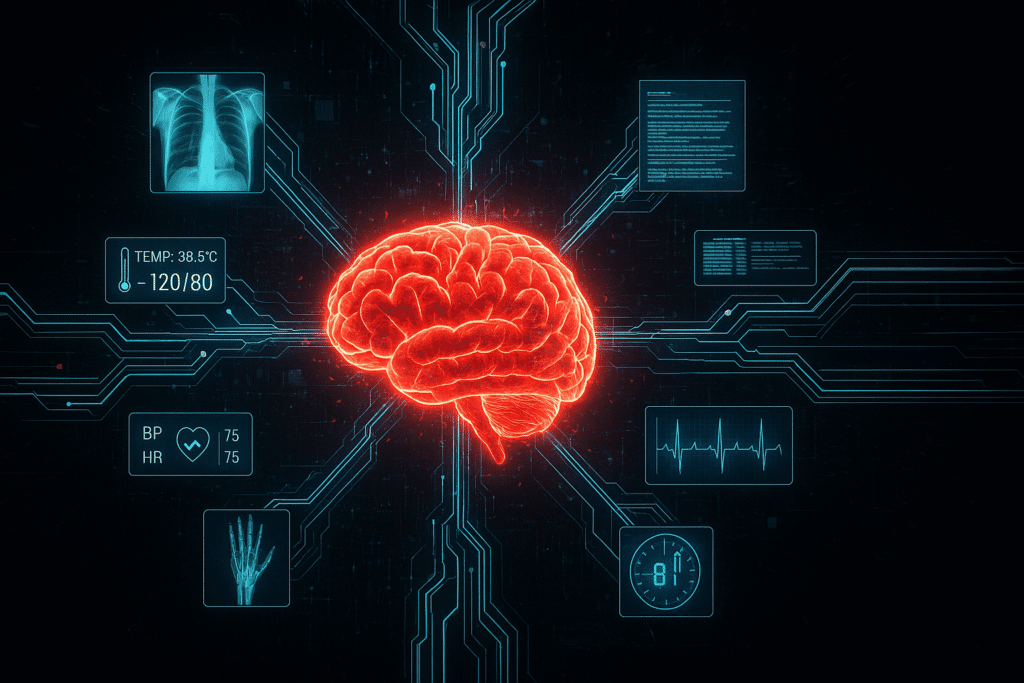
The incredible speed in this story is made possible by a core piece of technology: a time-compression engine. At its heart, this is a high-speed simulator that can model every stage of patient care—from the first symptom to full recovery—at a speed far exceeding real-time. What might take days or weeks in the real world is calculated by the AI in just minutes. This allows the system to test thousands of “what-if” scenarios, from different medication dosages to potential complications, to find the best possible outcome for a patient.
The Real Story
The global market for AI in healthcare is already skyrocketing, projected to reach over $110 billion by 2030 [1]. A whopping 79% of healthcare organizations are already using some form of AI, and physician usage jumped from 38% to 66% in just two years [2]. This isn’t science fiction; it’s happening right now, with over 340 FDA-approved AI tools helping diagnose everything from breast cancer to strokes [3]. Even for patients, 60% are using AI for symptom checks, and 78% understand their lab results better with AI explanations [2].
China has set a breathtaking benchmark. But the real race isn’t about who builds the first AI hospital. It’s about who builds the healthcare brain the rest of the world will depend on. It’s about who controls—and governs—these vast networks of medical intelligence.
This blog post is inspired by the very real and ground-breaking work being done at Tsinghua University in China. The core concepts, including the “AI Agent Hospital,” its simulated environment, the number of AI doctors and specialties, and the impressive 93.06% accuracy on the MedQA licensing benchmark, are all based on published reports and academic research [4].
For more information, you can read the original news reports about the launch of the AI Agent Hospital and the MedAgent-Zero system.
Sources
[1] Early Cancer, TB Detection AI Health-Tech Startup Qure.ai Eyes IPO Within 2 Years
[2] “Future of Healthcare: Top 5 Trends for 2023 and Beyond,” PwC
[3] “FDA Approvals Surge for AI-Enabled Medical Devices,” Goodwin
[4] “How Robodoctors Are Shaping the Future of Healthcare,” Mouser Electronics
We hope you enjoyed this glimpse into a future where healthcare can deliver better outcomes for you and your loved ones. Stay tuned for more stories that bring technology to life.